Showing posts with label metabolism. Show all posts

Saturday, 20 July 2013

10 diet rules meant to be broken

Some food dos and don'ts are best ignored, experts say.

WebMD Medical Reference
Medically Reviewed by Dr Rob Hicks
Do these diet truisms ring any bells in your mind?:
  • Don't eat before bedtime or you'll gain weight.
  • Missing meals will help you lose the pounds.
  • If you want to stay on a diet, eat at the same time every day.
Experts say these are among dozens of silly food 'rules' we often try to follow to the letter. Some are half-truths, some are complete myths, and some are clearly more harmful than others, but most of them won't help you lose weight or make dieting any easier.

10 food rules to ignore


1. Eating at night will pile on the pounds.
It's the total calories you consume over a 24-hour period - and more often, over a week - that causes you to gain weight, and when you eat those calories doesn't matter. That said, because you may be more tired at night, your resolve may be lower, so you may tend to eat larger portions, or more high-calorie foods, than you would during the day. But as long as you keep an eye on calories and portion size, feel free to set your hunger alarm to the time that suits your lifestyle.

2. It's best to eat at the same times every day.
Eating when you're hungry rather than when the clock says it's time to eat is a better strategy than eating at the same time every day. While it can help to keep some consistency to mealtimes, forcing yourself to eat when you're not hungry - or forcing yourself to wait when you are - only makes it harder to stick to your diet. If you must eat at a certain time,  for example, during a set lunch break at work - cut yourself some slack the rest of the day and eat only when your stomach says it's time.

3. Dieting with a friend always makes weight loss easier.
No one doubts that companionship and common goals can pay off for dieters. But there are some instances in which the buddy system may work against you and your friend.
If one friend fails and the other doesn't, it could upset the balance. Also if one friend falls off the diet wagon, the other may follow suit. Ultimately, weight loss is a personal journey. If you find it's easier with a friend, remember to compete only against yourself - not each other.

4. Dietary fat keeps you feeling full longer, so you'll eat less.
This was a well-accepted food rule for many years but new research has challenged this logic. It has shown that while fat does take longer to digest, it's actually the least satiating of any food group so it won’t help you control your appetite. The foods likely to stave off hunger the longest are protein foods, followed by carbohydrates, then fats.

5. When you disrupt your diet, you might as well wait until the next day to get back on track.
Nothing could be farther from the truth. Every meal matters, so if you ate a big piece of birthday cake at lunch time, you can still get back on track with your next meal. You don't have to have a full day of healthy eating in order for it to count.

6. Refusing food at a party or when visiting is rude.
If you had diabetes, or a severe food allergy to something, you wouldn't think twice about turning down food you weren't sure of - and you should feel that same sense of priority in turning down a food that you know will disrupt your diet - most people will understand.

7. Missing a meal every now and then will help you lose weight.
Missing a meal means you will be so hungry at the next meal that you are likely to overeat, say experts.  Not only that, missing meals can actually help lead to a slowdown of your metabolism, meaning you'll burn fewer calories.

8. Bread is fattening, nuts are fattening, pasta is fattening.
It's not what you eat that contributes to weight gain, it's how much you eat that matters most.
Whole wheat bread, for example, is a great source of nutrients, and it won't make you gain weight more than any other food with the same number of calories.

9. All calories are equal.
While it's true that 1,400 calories is 1,400 calories, experts say certain foods have a greater ability to fill you up before they fill you out. These tend to be fibre-rich, water-rich foods, like fruit, vegetables, and whole grains.
All calories are equal if all you're doing is counting calories to lose weight but if you care about how you are losing weight, or controlling your hunger, or the health of your body, then all calories are not of equal value.

10. If you don't clean your plate, you're wasting food.
Tying emotions to eating (like when you feel guilty about leaving food on your plate) sets the stage for emotional overeating. If you've been taught that cleaning your plate is the best way to show appreciation for a meal, consider showing your gratitude with verbal praise instead.
Food is simply a source of fuel for the body - not an emotional payoff or payment. If you don't feel right leaving the table until you've cleaned your plate, put less food on your plate to begin with.

SOURCES: Elizabeth Somer, MA, RD, author, 10 Habits That Mess Up a Woman's Diet. Abby Aronowitz, PhD, author, Your Final Diet; director, SelfHelpDirectives.com; Samantha Heller, MS, RD, senior clinical nutritionist, New York University Medical Center, USA.
Reviewed on February 20, 2012

Monday, 15 July 2013

Preventing Weight Gain


couple cookingIf you're currently at a healthy weight, you're already one step ahead of the game. To stay at a healthy weight, it's worth doing a little planning now.

Or maybe you are overweight but aren't ready to lose weight yet. If this is the case, preventing further weight gain is a worthy goal.

As people age, their body composition gradually shifts — the proportion of muscle decreases and the proportion of fat increases. This shift slows their metabolism, making it easier to gain weight. In addition, some people become less physically active as they get older, increasing the risk of weight gain.

The good news is that weight gain can be prevented by choosing a lifestyle that includes good eating habits and daily physical activity. By avoiding weight gain, you avoid higher risks of many chronic diseases, such as heart disease, stroke, type 2 diabetes, high blood pressure, osteoarthritis, and some forms of cancer.


Choosing an Eating Plan to Prevent Weight Gain

So, how do you choose a healthful eating plan that will enable you to maintain your current weight? The goal is to make a habit out of choosing foods that are nutritious and healthful. To learn more, visit Healthy Eating for a Healthy Weight.
If your goal is to prevent weight gain, then you'll want to choose foods that supply you with the appropriate number of calories to maintain your weight. This number varies from person to person. It depends on many factors, including your height, weight, age, sex, and activity level. For more, see Balancing Calories.

Get Moving!

photo of asian man speed-walkingIn addition to a healthy eating plan, an active lifestyle will help you maintain your weight. By choosing to add more physical activity to your day, you'll increase the amount of calories your body burns. This makes it more likely you'll maintain your weight.

Although physical activity is an integral part of weight management, it's also a vital part of health in general. Regular physical activity can reduce your risk for many chronic diseases and it can help keep your body healthy and strong. To learn more about how physical activity can help you maintain a healthy weight, visit Physical Activity for Healthy Weight.

Self-monitoring

You may also find it helpful to weigh yourself on a regular basis. If you see a few pounds creeping on, take the time to examine your lifestyle. With these strategies, you make it more likely that you'll catch small weight gains more quickly.
Ask yourself—
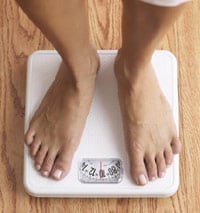
    photo of feet on scale
  • Has my activity level changed?
  •  Am I eating more than usual? You may find it helpful to keep a food diary for a few days to make you more aware of your eating choices.
If you ask yourself these questions and find that you've decreased your activity level or made some poor food choices, make a commitment to yourself to get back on track. Set some reasonable goals to help you get more physical activity and make better food choices.


Resource: http://www.cdc.gov/healthyweight/prevention/index.html

Monday, 11 March 2013

Get the Body of Your Dreams with Fat Loss Factor Principles

Fat Loss Factor contains guidelines for a quick healthy lifestyle plan that can help anyone in any physical condition to lose unwanted belly fat. From the first principle of preparing for success to the last one, FLF implements a lifestyle of fitness, eating right for your body, and the mental attitude that it takes to reach your goal weight. The book is chock full of practical, down to earth advice.

Fat Loss Factor starts by measuring your basic statistics including weight, and body fat percentage. You are also asked to get photographs of yourself at the start so you can monitor your progress through the program. You’re advised to check your clothing at the beginning too, because you’ll likely find it to fit more loosely as you apply the principles of the program. Waist measurements are important too: women should ideally be around thirty two inches while a thirty five inch waist is ideal for men.

The program doesn’t take a miracle approach to get what it promises: a lean, healthy body that you can be proud of. These goals are reached through the consistent practice of proven principles of fitness and health. For example, the book stipulates early on that a change in eating habits is essential to your physical goals. Eating healthy foods that promote fat loss, metabolism, and energy is equally important to following the exercise regimen prescribed in the book.

Once your body is cleansed and fueled by natural foods, you are introduced into some basic fat loss principles for exercise. According to the book, building muscle is essential to burning fat. That’s right, you won’t need any diet pills or other trendy supplements to get the body you want. The book explains how muscle tissue burns more calories than fat tissue, giving you the ability to burn fat even when you’re not working out. By working in sets and supersets, Fat Loss Factor guides you through basic exercises that will build the muscle you need without bulking up.

By the time you reach the fourth principle of fat loss, you will find out that traditional cardiovascular routines are not what you want to do for your exercise. Citing scientific research from around the world, Fat Loss Factor urges exercising in bursts or what is called burst training. By alternating between high intensity and low intensity intervals, your body burns more fat and your workout is much shorter!

Readers will find Fat Loss Factor an entertaining and informative read that will motivate them to avoid weight loss and fitness gadgets and gimmicks and steer them toward practical fat loss methods that work.

Have a look at Fat Loss Factor for yourself 

Tuesday, 5 March 2013

Fat Burning Tip #3

Fat Burning Tip #3: Lift Weights
 
Adding more muscle by lifting weights can also help with burning fat, especially if you're also dieting. Lifting weights:
  • Preserves muscle mass -- If you diet to lose weight, you actually risk losing muscle as well as fat. Muscle is metabolically active, so when you lose it, you also lose the extra calorie-burn muscles can provide.
  • Keeps your metabolism going -- Some studies have found that a diet-only approach to weight loss could lower a person's resting metabolic rate by up to 20% a day. Lifting weights and maintaining muscle helps keep the metabolism up, even if you're cutting your calories.
  • Helps you burn extra calories -- If you lift weights at a higher intensity, you can actually increase your afterburn, or the calories you burn after your workout. As About.com Weight Training Guide Paul Rogers states in his article, Burn More Fat, "If you can get afterburn...that’s a bonus because you burn fat during the exercise and after you cease as well."

21 Ways to Burn Fat Faster 


Strength Training Resources

There's no way around the fact that, when it comes to burning more fat, we have to work at it. There is no magic exercise, workout or pill that will do the job for us. But, the good news is that it doesn't take much activity to push the body into that fat burning mode. Try incorporating some type of activity every day, even if it's just a quick walk, and build on that over time as it becomes more of a routine. Do that and you're on the way to burning more fat.

Sources:
Kinucan, Paige and Kravitz, Len. "Controversies in Metabolism." www.drlenkravitz.com. Retrieved Oct. 3, 2007.

Kravitz, Len. "Fat Facts." IDEA Fitness Journal, Sept. 2007.
Thompson, D.L. et al. "Substrate use during and following moderate- and low-intensity exercise: Implications for weight control." European Journal of Applied Physiology and Occupational Physiology 1998; 78(1), 43-49.

By , About.com Guide
About.com Health's Disease and Condition content is reviewed by our Medical Review Board

Thursday, 25 October 2012

21 Ways to Burn Fat Faster (16 - 21)

Snack away during the day
Grazing is a surprisingly good idea because it helps you avoid metabolic slowdown. "Your body will be tricked into thinking it's constantly eating, so it will never slow your metabolism down," explains Bauer. Aim for five small meals (200 to 500 calories) a day rather than three large ones. Also try not to go more than four hours without eating -- if you eat breakfast at 7am, for example, have a snack at 10am, lunch at noon, another snack at 3pm and dinner at 7pm.

Skip the starch
Carb crazy? Consider this: Refined carbohydrates, such as bread, potatoes and rice, create a surge in insulin that in turn drives down your resting metabolic rate, explains Aronne. "It's important to keep carbohydrates in your diet, but really focus on fruits, vegetables and whole grains, which have less of an effect on insulin levels," he explains. And when buying whole-grain breads and cereals, make sure the first ingredient listed is whole wheat, whole oat or cracked wheat.

Break up your workouts
Try dividing your workouts into two shorter 20-minute sessions. You'll rev up your metabolism for an hour or two after each workout, which means you'll burn more calories than if you did one longer session. Don't have time? Even small bursts of activity will get your metabolism chugging again, according to a study in Nature. "Just a five-minute walk around the house every hour translates into an extra 200 to 300 calories burned every day," says Peeke.

Pace while you're on the phone
People who are constantly in motion -- crossing and uncrossing their legs, stretching and pacing -- burn more calories. When researchers at the Mayo Clinic asked subjects to eat an additional 1,000 calories a day for eight weeks, they found that only the nonfidgeters stored the calories as fat

Eat more bananas
They're full of potassium, which revs up your metabolism by regulating your body's water balance, says vitamin expert Susan Lark, M.D., author of The Lark Letter. If you're dehydrated, you'll burn fewer calories. Make sure you're getting at least 2,000 mg: a banana has 450 mg, a cup of milk has 370 mg and an orange has 250 mg.

Get enough z's
Yeah, Russell Crowe may be on Letterman, but it's way more important for your waistline if you don't stay up. A study at the University of Chicago Medical Center found that people who got only four hours of sleep had much more difficulty processing carbs. The culprit? Increased levels of insulin and the stress hormone cortisol. "When you're exhausted, your body lacks the energy to do its normal day-to-day functions, which includes burning calories efficiently," says Talbott. So the best way to make sure your metabolism runs smoothly is to get six to eight hours of shut-eye each night.

Source http://www.redbookmag.com/health-wellness/losing-weight/burn-fat-yl

21 Ways to Burn Fat Faster (8 - 15)

Do more dairy
Women who ate low-fat dairy products, such as nonfat yogurt and low-fat cheese, three to four times a day lost 70 percent more fat than low-dairy dieters, according to a study published in the journal Obesity Research. "Calcium serves as a switch that tells your body to burn excess fat faster," explains study author Michael Zemel, M.D., director of the Nutrition Institute at the University of Tennessee in Knoxville. Sorry, but you won't reap the same benefits from calcium-fortified O.J. Research shows that you get the best results from dairy products themselves, not fortified foods. Aim for 1,200 mg, which includes about three servings of dairy a day.

Take up a new sport
Are you like Old Faithful when it comes to your morning walk or evening jog? Know this: The more you do an activity, the more your body adapts to it, so you burn fewer calories. If you want to light a fire under your metabolism, consider cross-training. For example, if you normally walk, try biking instead. "Since you're not used to working all those different muscles, it's a more intense workout, which can translate into a greater metabolic after-burn because your body is working harder to recover and get oxygen to all your tissues," says Carol Espel, M.S., an exercise physiologist for Equinox Fitness Clubs in New York City.

Go fish
Break out the lemon wedges: Regular fish eaters tend to have lower levels of the hormone leptin -- good because high levels of leptin have been linked to low metabolism and obesity, says Louis Aronne, M.D., an obesity specialist at the New York Presbyterian Weill Cornell Medical Center. Try to consume three to four servings of a fatty fish, such as salmon, tuna or mackerel, each week.

Say ommm
Stress may contribute to abdominal fat, according to several studies, including a recent one at the University of California, San Francisco. "When you're stressed, hormones like cortisol stimulate your appetite, slow your metabolism down and encourage fat storage inside your abdomen," explains Shawn Talbott, Ph.D., director of the Nutrition Clinic at the University of Utah. So what's a frazzled girl to do? "Find an activity that reduces stress for you, whether it's listening to soothing music or taking yoga, and do it daily," advises Talbott.

Have a PB & J
Think peanut butter is only for pint-sized palates? Think again. PB is rich in magnesium, a mineral that motors up your metabolism by giving your cells energy. Aim for 320 mg a day of magnesium: Good food sources include a peanut butter sandwich made with whole-wheat bread (100 mg) or spinach (1/2 cup has 80 mg).

Exercise off that PMS
You could lose more weight exercising during the later phase of your menstrual cycle than at any other time in your cycle, according to a recent study from the University of Adelaide in Australia. Hormones estrogen and progesterone fire up your fat-burning furnace: They promote your body's use of fat as an energy supply, so more is burned off when you exercise. "Women burned about 30 percent more fat for the two weeks following ovulation to about two days before menstruation," explains study author Leanne Redman.

Don't blow off breakfast
Studies show that eating breakfast plays a part in successful weight loss -- almost 80 percent of people who successfully keep weight off chow down on this meal, according to a study published in Obesity Research. "Your metabolism slows as you sleep, and the process of digesting food revs it up again," explains Heller. Aim for a 300- to 400-calorie breakfast, such as a high-fiber cereal (another metabolism booster) with skim milk and fruit.

Pump up protein
Not in an extreme, Atkins sort of way, but having a little protein at every meal fires up your metabolism. "Your digestive system uses more energy to break it down, so you burn more calories," explains Lisa Dorfman, R.D. However, keep protein levels to between 20 and 35 percent of your diet; eating too much of it can cause kidney strain and may cause your body to store too much fat.

21 Ways to Burn Fat Faster (16 - 21)  

Source http://www.redbookmag.com/health-wellness/losing-weight/burn-fat-yl