Showing posts with label Healthy eating plan. Show all posts

Monday, 15 July 2013

Preventing Weight Gain


couple cookingIf you're currently at a healthy weight, you're already one step ahead of the game. To stay at a healthy weight, it's worth doing a little planning now.

Or maybe you are overweight but aren't ready to lose weight yet. If this is the case, preventing further weight gain is a worthy goal.

As people age, their body composition gradually shifts — the proportion of muscle decreases and the proportion of fat increases. This shift slows their metabolism, making it easier to gain weight. In addition, some people become less physically active as they get older, increasing the risk of weight gain.

The good news is that weight gain can be prevented by choosing a lifestyle that includes good eating habits and daily physical activity. By avoiding weight gain, you avoid higher risks of many chronic diseases, such as heart disease, stroke, type 2 diabetes, high blood pressure, osteoarthritis, and some forms of cancer.


Choosing an Eating Plan to Prevent Weight Gain

So, how do you choose a healthful eating plan that will enable you to maintain your current weight? The goal is to make a habit out of choosing foods that are nutritious and healthful. To learn more, visit Healthy Eating for a Healthy Weight.
If your goal is to prevent weight gain, then you'll want to choose foods that supply you with the appropriate number of calories to maintain your weight. This number varies from person to person. It depends on many factors, including your height, weight, age, sex, and activity level. For more, see Balancing Calories.

Get Moving!

photo of asian man speed-walkingIn addition to a healthy eating plan, an active lifestyle will help you maintain your weight. By choosing to add more physical activity to your day, you'll increase the amount of calories your body burns. This makes it more likely you'll maintain your weight.

Although physical activity is an integral part of weight management, it's also a vital part of health in general. Regular physical activity can reduce your risk for many chronic diseases and it can help keep your body healthy and strong. To learn more about how physical activity can help you maintain a healthy weight, visit Physical Activity for Healthy Weight.

Self-monitoring

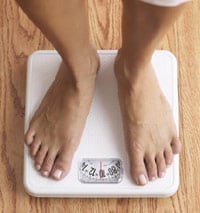
You may also find it helpful to weigh yourself on a regular basis. If you see a few pounds creeping on, take the time to examine your lifestyle. With these strategies, you make it more likely that you'll catch small weight gains more quickly.
Ask yourself—
    photo of feet on scale
  • Has my activity level changed?
  •  Am I eating more than usual? You may find it helpful to keep a food diary for a few days to make you more aware of your eating choices.
If you ask yourself these questions and find that you've decreased your activity level or made some poor food choices, make a commitment to yourself to get back on track. Set some reasonable goals to help you get more physical activity and make better food choices.


Resource: http://www.cdc.gov/healthyweight/prevention/index.html

Sunday, 2 June 2013

Keeping The Weight Off

If you've recently lost excess weight, congratulations! It's an accomplishment that will likely benefit your health now and in the future. Now that you've lost weight, let's talk about some ways to maintain that success.
The following tips are some of the common characteristics among people who have successfully lost weight and maintained that loss over time.1
  • Watch Your Diet
  • Be Active
  • Stay on Course

Watch Your Diet

  • man and girl eating cerealFollow a healthy and realistic eating pattern. You have embarked on a healthier lifestyle, now the challenge is maintaining the positive eating habits you've developed along the way. In studies of people who have lost weight and kept it off for at least a year, most continued to eat a diet lower in calories as compared to their pre-weight loss diet.2 
  • Keep your eating patterns consistent. Follow a healthy eating pattern regardless of changes in your routine. Plan ahead for weekends, vacations, and special occasions. By making a plan, it is more likely you'll have healthy foods on hand for when your routine changes.
  • Eat breakfast every day. Eating breakfast is a common trait among people who have lost weight and kept it off. Eating a healthful breakfast may help you avoid getting "over-hungry" and then overeating later in the day.

photo of woman walking dogsBe Active

  • Get daily physical activity. People who have lost weight and kept it off typically engage in 60—90 minutes of moderate intensity physical activity most days of the week while not exceeding calorie needs. This doesn't necessarily mean 60—90 minutes at one time. It might mean 20—30 minutes of physical activity three times a day. For example, a brisk walk in the morning, at lunch time, and in the evening. Some people may need to talk to their healthcare provider before participating in this level of physical activity.


Stay on Course

  • Monitor your diet and activity. Keeping a food and physical activity journal can help you track your progress and spot trends. For example, you might notice that your weight creeps up during periods when you have a lot of business travel or when you have to work overtime. Recognizing this tendency can be a signal to try different behaviors, such as packing your own healthful food for the plane and making time to use your hotel's exercise facility when you are traveling. Or if working overtime, maybe you can use your breaks for quick walks around the building.
  • Monitor your weight. Check your weight regularly. When managing your weight loss, it's a good idea to keep track of your weight so you can plan accordingly and adjust your diet and exercise plan as necessary. If you have gained a few pounds, get back on track quickly.
  • photo of a couple playing tennisGet support from family, friends, and others. People who have successfully lost weight and kept it off often rely on support from others to help them stay on course and get over any "bumps." Sometimes having a friend or partner who is also losing weight or maintaining a weight loss can help you stay motivated.

Want to learn more?

Improving Your Eating Habits
Your eating habits may be leading to weight gain; for example, eating too fast, always clearing your plate, eating when you not hungry and skipping meals (or maybe just breakfast).
Physical Activity for a Healthy Weight
Regular physical activity is important for good health, and it's especially important if you're trying to lose weight or to maintain a healthy weight.

References

1National Weight Control Registry The National Weight Control Registry (NWCR) was developed to identify and investigate the characteristics of individuals who have succeeded at long-term weight loss. The NWCR is tracking over 5,000 individuals who have lost significant amounts of weight and kept it off for long periods of time.
2Wing RR, Phelan S. Long-term weight loss maintenance. Am J Clin Nutr 2005;82(suppl):222S-5S.

Resources: Centers For Disease Control & Prevention http://www.cdc.gov 

Thursday, 25 October 2012

Eat More, Weigh Less?

How to manage your weight without being hungry.

Have you tried to lose weight by cutting down the amount of food you eat? Do you still feel hungry and not satisfied after eating? Or have you avoided trying to lose weight because you're afraid of feeling hungry all the time? If so, you are not alone. Many people throw in the towel on weight loss because they feel deprived and hungry when they eat less. But there is another way. Aim for a slow, steady weight loss by decreasing calorie intake while maintaining an adequate nutrient intake and increasing physical activity. You can cut calories without eating less nutritious food. The key is to eat foods that will fill you up without eating a large amount of calories.

If I cut calories, won't I be hungry?

Research shows that people get full by the amount of food they eat, not the number of calories they take in. You can cut calories in your favorite foods by lowering the amount of fat and or increasing the amount of fiber-rich ingredients, such as vegetables or fruit.
Let's take macaroni and cheese as an example. The original recipe uses whole milk, butter, and full-fat cheese. This recipe has about 540 calories in one serving (1 cup).
photo of macaroni and cheese with 540 calories


Here's how to remake this recipe with fewer calories and less fat:

  • Use 2 cups non-fat milk instead of 2 cups whole milk.
  • Use 8 ounces light cream cheese instead of 21⁄4 cups full-fat cheddar cheese.
  • Use 1 tablespoon butter instead of 2 or use 2 tablespoons of soft trans-fat free margarine.
  • Add about 2 cups of fresh spinach and 1 cup diced tomatoes (or any other veggie you like).
Your redesigned mac and cheese now has 315 calories in one serving (1 cup). You can eat the same amount of mac and cheese with 225 fewer calories.
photo of macaroni and cheese with 315 calories


What foods will fill me up?

To be able to cut calories without eating less and feeling hungry, you need to replace some higher calorie foods with foods that are lower in calories and fat and will fill you up. In general, this means foods with lots of water and fiber in them. The chart below will help you make smart food choices that are part of a healthy eating plan.

These foods will fill you up with less calories. Choose them more often… These foods can pack more calories into each bite. Choose them less often…

Fruits and Vegetables
(prepared without added fat)
Fried foods
Spinach, broccoli, tomato, carrots, watermelon, berries, apples Eggs fried in butter, fried vegetables, French fries
Low-fat and fat-free milk products Full-fat milk products
Low- or fat-free milk, low or fat-free yogurt,
low- or fat-free cottage cheese
Full-fat cheese, full-fat ice cream,
whole and 2% milk
Broth-based soup Dry snack foods
Vegetable-based soups, soups with chicken or beef broth, tomato soups (without cream) Crackers or pretzels, cookies, chips, dried fruits
Whole grains Higher-fat and higher-sugar foods
Brown rice, whole wheat bread, whole wheat
pastas, popcorn
Croissants,margarine, shortening and butter,
doughnuts, candy bars, cakes and pastries
Lean meat, poultry and fish Fatty cuts of meat
Grilled salmon, chicken breast without skin,
ground beef (lean or extra lean)
Bacon, brisket, ground beef (regular)
Legumes (beans and peas)
Black, red kidney and pinto beans (without added fat), green peas, black-eyed peas

A healthy eating plan is one that —

  • Emphasizes fruits, vegetables, whole grains, and fat free or low-fat milk and milk products.
  • Includes lean meats, poultry, fish, beans, eggs, and nuts.
  • Is low in saturated fats, trans fats, cholesterol, salt (sodium), and added sugars.
  • Stays within your calorie needs.
Technically speaking…
The number of calories in a particular amount or weight of food is called "calorie density" or "energy density." Low-calorie-dense foods are ones that don't pack a lot of calories into each bite.

Foods that have a lot of water or fiber and little fat are usually low in calorie density. They will
help you feel full without an unnecessary amount of calories.


Here are some more ideas for cutting back on calories without eating less and being hungry:

Instead of... Try...
Fried chicken sandwich
with 1 tbsp. mayonnaise
= 599 calories
Grilled chicken salad
with low-fat dressing

2 cups lettuce, 2 oz. grilled
chicken breast, 2 tbsp. light
balsamic vinaigrette dressing
= 178 calories
Cream-based soup
Cream-based soup
1 cup mushroom bisque
= 400 calories
Broth-based soup
Broth-based soup
1 cup minestrone
= 112 calories
Chips or pretzels
Chips or pretzels
1.5 oz. pretzels
= 162 calories
Baby carrots with hummus
16 baby carrots with 1 tbsp. hummus
= 75 calories


Good things can come in big packages!

People eat more than they realize when faced with large portion sizes. This usually means eating too many calories. But, not all large portions are created equal. Larger portions of water- and fiber-rich foods, like fruits, vegetables, and broth-based soups, can fill you up with less calories. Start with an appetizer. Research shows that if you eat a low-calorie appetizer before a meal, you will eat fewer total calories during the meal. Start your meals with a broth-based soup or a green salad without a large amount of cheese, or croutons.
For more on portion sizes, see How to Avoid Portion Size Pitfalls to Help Manage Your Weight.


Fruits and veggies: keep it simple!

Most fruits and veggies are low-calorie and will fill you up, but the way you prepare them can change that. Breading and frying, and using high-fat creams or butter with vegetables and fruit will add extra calories. Try steaming vegetables and using spices and low-fat sauces for flavor. And enjoy the natural sweetness of raw fruit.
For more on fruits and vegetables, see How to Use Fruits and Vegetables to Help Manage Your Weight .


What about beverages?

While drinking beverages is important to good health, they don't help you feel full and satisfied the way food does. Choose drinks without calories, like water, sparkling water, or unsweetened iced tea. Drink fat-free or low-fat milk instead of 2% or whole milk.
For more on drinks, see Rethink Your Drink .

Source http://www.cdc.gov/healthyweight/healthy_eating/energy_density.html

Monday, 27 August 2012

Healthy Eating for a Healthy Weight

A healthy lifestyle involves many choices. Among them, choosing a balanced diet or healthy eating plan. So how do you choose a healthy eating plan? Let's begin by defining what a healthy eating plan is.


According to the Dietary Guidelines for Americans 2010, a healthy eating plan:
    photo of vegetables on a grill
  • Emphasizes fruits, vegetables, whole grains, and fat-free or low-fat milk and milk products
  • Includes lean meats, poultry, fish, beans, eggs, and nuts
  • Is low in saturated fats, trans fats, cholesterol, salt (sodium), and added sugars
  • Stays within your daily calorie needs


Eat Healthfully and Enjoy It!


A healthy eating plan that helps you manage your weight includes a variety of foods you may not have considered. If "healthy eating" makes you think about the foods you can't have, try refocusing on all the new foods you can eat—

  • photo of woman eating mango 
  •  Fresh fruits ― don't think just apples or bananas. All fresh fruits are great choices. Be sure to try some "exotic" fruits, too. How about a mango? Or a juicy pineapple or kiwi fruit! When your favorite fresh fruits aren't in season, try a frozen, canned, or dried variety of a fresh fruit you enjoy. One caution about canned fruits is that they may contain added sugars or syrups. Be sure and choose canned varieties of fruit packed in water or in their own juice.
  • Fresh vegetables ― try something new. You may find that you love grilled vegetables or steamed vegetables with an herb you haven't tried like rosemary. You can sauté vegetables in a non-stick pan with a small amount of cooking spray. Or try frozen or canned vegetables for a quick side dish — just microwave and serve. When trying canned vegetables, look for vegetables without added salt, butter, or cream sauces. Commit to going to the produce department and trying a new vegetable each week.
  • Calcium-rich foods ― you may automatically think of a glass of low-fat or fat-free milk when someone says "eat more dairy products." But what about low-fat and fat-free yogurts without added sugars? These come in a wide variety of flavors and can be a great dessert substitute for those with a sweet tooth.
  • A new twist on an old favorite ― if your favorite recipe calls for frying fish or breaded chicken, try healthier variations using baking or grilling. Maybe even try a recipe that uses dry beans in place of higher-fat meats. Ask around or search the internet and magazines for recipes with fewer calories ― you might be surprised to find you have a new favorite dish!
     

Do I have to give up my favorite comfort food?


No! Healthy eating is all about balance. You can enjoy your favorite foods even if they are high in calories, fat or added sugars. The key is eating them only once in a while and balance them out with healthier foods and more physical activity.

Some general tips for comfort foods:
  • Consume them less often. If you normally eat these foods every day, cut back to once a week or once a month. You'll be cutting your calories because you're not having the food as often.
  • Eat smaller amounts. If your favorite higher calorie food is a chocolate bar, have a smaller size or only half a bar. Be careful! This technique works well for some people, but others may find it is too tempting to have their favorite food available, even in smaller amounts.
  • Try a lower-calorie version. Use lower-calorie ingredients or prepare it differently. For example, if your macaroni and cheese recipe uses whole milk, butter, and full-fat cheese, try remaking it with non-fat milk, less butter, light cream cheese, fresh spinach and tomatoes. Just remember to not increase your portion size. For more ideas on how to cut back on calories, see Eat More Weigh Less.


photo of 2 variations of macaroni and cheese, one with 540 calories and one with 315 calories

The point is, you can figure out how to include almost any food in your healthy eating plan in a way that still helps you lose weight or maintain a healthy weight.

Being consistently healthy in your eating choices is the key. Making the same healthy eating choices over time can lead to better eating habits. By thinking more positively and focusing on what you can have, you'll help yourself establish healthy eating habits.

Source http://www.cdc.gov/healthyweight/healthy_eating/index.html

Sunday, 26 August 2012

How To Lose Weight

So you've decided to lose weight. But how do you do it? There are many ways to lose weight, but the best method is to choose an eating plan that is healthy and balanced and that you can stick with in the long run.

As difficult as losing weight may seem, the real challenge is keeping the weight off. To be successful, you'll need to replace poor eating habits with healthy ones that are realistic and flexible enough to be followed for life.

Some diet programs promise weight reductions of more than two or three pounds a week, but such claims are not completely honest. Ten or more pounds in the first few weeks is possible, but that quick weight loss won't last.

Initially, weight reduction comes mostly from the loss of water and the breakdown of muscle protein, not fat. When you eventually replace these vital substances -- as will happen when you resume normal eating habits -- you are likely to regain the weight. Diets that promote transient weight losses can do psychological harm. Few things are more discouraging than watching a 10- or 20-pound weight loss evaporate into a 2- or 3-pound loss.

Weight Loss Tips
  • Ultimate Weight Loss Quiz
  • 10 Things Dieters Need to Know About Metabolism
  • Planning a Weight Loss Diet
The National Weight Control Registry (NWCR) was established to document effective behaviors shared by those who successfully lose weight and keep it off. The NWCR found that those who successfully lost weight dropped an average of 66 pounds over 5.5 years. To achieve this, individuals not only adhered to a low-calorie, low-fat diet that included breakfast and closely monitored their weight and food intake, but they also engaged in high levels of physical activity.

Source http://health.howstuffworks.com/wellness/diet-fitness/weight-loss/how-to-lose-weight.htm