
Showing posts with label healthy weight. Show all posts

Monday, 15 July 2013

Preventing Weight Gain


couple cookingIf you're currently at a healthy weight, you're already one step ahead of the game. To stay at a healthy weight, it's worth doing a little planning now.

Or maybe you are overweight but aren't ready to lose weight yet. If this is the case, preventing further weight gain is a worthy goal.

As people age, their body composition gradually shifts — the proportion of muscle decreases and the proportion of fat increases. This shift slows their metabolism, making it easier to gain weight. In addition, some people become less physically active as they get older, increasing the risk of weight gain.

The good news is that weight gain can be prevented by choosing a lifestyle that includes good eating habits and daily physical activity. By avoiding weight gain, you avoid higher risks of many chronic diseases, such as heart disease, stroke, type 2 diabetes, high blood pressure, osteoarthritis, and some forms of cancer.


Choosing an Eating Plan to Prevent Weight Gain

So, how do you choose a healthful eating plan that will enable you to maintain your current weight? The goal is to make a habit out of choosing foods that are nutritious and healthful. To learn more, visit Healthy Eating for a Healthy Weight.
If your goal is to prevent weight gain, then you'll want to choose foods that supply you with the appropriate number of calories to maintain your weight. This number varies from person to person. It depends on many factors, including your height, weight, age, sex, and activity level. For more, see Balancing Calories.

Get Moving!

photo of asian man speed-walkingIn addition to a healthy eating plan, an active lifestyle will help you maintain your weight. By choosing to add more physical activity to your day, you'll increase the amount of calories your body burns. This makes it more likely you'll maintain your weight.

Although physical activity is an integral part of weight management, it's also a vital part of health in general. Regular physical activity can reduce your risk for many chronic diseases and it can help keep your body healthy and strong. To learn more about how physical activity can help you maintain a healthy weight, visit Physical Activity for Healthy Weight.

Self-monitoring

You may also find it helpful to weigh yourself on a regular basis. If you see a few pounds creeping on, take the time to examine your lifestyle. With these strategies, you make it more likely that you'll catch small weight gains more quickly.
Ask yourself—
    photo of feet on scale
  • Has my activity level changed?
  •  Am I eating more than usual? You may find it helpful to keep a food diary for a few days to make you more aware of your eating choices.
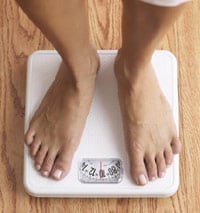
If you ask yourself these questions and find that you've decreased your activity level or made some poor food choices, make a commitment to yourself to get back on track. Set some reasonable goals to help you get more physical activity and make better food choices.


Resource: http://www.cdc.gov/healthyweight/prevention/index.html

Sunday, 2 June 2013

Getting Started with Physical Activity for a Healthy Weight

Should I take any precautions before becoming more active?

People with chronic diseases, such as a heart condition, arthritis, diabetes, or high blood pressure, should talk to their doctor about what types and amounts of physical activity are appropriate.

Get Motivated!

If you've not been physically active in a while, you may be wondering how to get started again. Lace up those sneakers and find some motivating ideas here.

Here are some tips to help get you started:
  • photo of two women walkingLook for opportunities to reduce sedentary time and to increase active time. For example, instead of watching TV, try taking a walk after dinner.
  • Set aside specific times for physical activity in your schedule to make it part of your daily or weekly routine.
  • Start with activities, locations, and times you enjoy. For example, some people might like walking in their neighborhood in the mornings; others might prefer an exercise class at a health club after work.
  • Try activities with friends or family members to help with motivation and mutual encouragement.
  • Start slowly and work your way up to more physically challenging activities. For many people, walking is a particularly good place to begin.
  • When necessary, break up your daily activity goal into smaller amounts of time. For example, you could break the 30-minute a day recommendation into three 10-minute sessions or two 15-minute sessions. Just make sure the shorter sessions are at least 10 minutes long.
For many people, walking offers a great way to become more active. For some ideas on how to begin, see the walking plans at the following sites:
  • Weight-control Information Network: Walking — A Step in the Right Direction
  • American Heart Association: Why Start! Walking?
For more information about physical activity if you're overweight or obese, suggestions for initial  activities, and safety tips, see Active at Any Size.

Strategies for Overcoming Obstacles to Physical Activity

If you're just getting started, you might face certain obstacles that seem difficult to overcome. A few examples of common obstacles and strategies for overcoming them are shown in the following table.
Obstacle Try This
I just don't have time to be physically active. Identify available time slots. Monitor your daily activities for one week. Identify at least three 30-minute time slots you could use for physical activity.
I don't have anyone to go with me.  Develop new friendships with physically active people. Join a group, such as the YMCA or a hiking club.
I'm so tired when I get home from work. Schedule physical activity for times in the day or week when you feel energetic.
I have so much on my "to do" list already, how can I do physical activity too? Plan ahead. Make physical activity a regular part of your daily or weekly schedule by writing it on your calendar. Keep the appointment with yourself.
I'll probably hurt myself if I try to be more physically active. Consult with a health professional or educational material to learn how to exercise appropriately considering your age, fitness level, skill level, and health status.
I'm not coordinated enough to be physically active. I can't learn something new at my age! Select activities requiring no new skills, such as walking, climbing stairs, or jogging.
My job requires me to be on the road, it's impossible for me to exercise. Stay in places with swimming pools or exercise facilities. Or find a DVD exercise tape that you enjoy and request a DVD player with your room.
I have small children and it's impossible to have time to myself for exercise. Trade babysitting time with a friend, neighbor, or family member who also has small children. As children get older, family bike rides or walks might be another option.
Adapted from Physical Activity for Everyone: Making Physical Activity Part of Your Life: Overcoming Barriers to Physical Activity.

Want to learn more?

Physical Activity for a Healthy Weight
You are probably already aware that regular physical activity is important for good health, but did you know that it's especially important if you're trying to lose weight or to maintain a healthy weight?

Resources: Centers For Disease Control & Prevention http://www.cdc.gov

Physical Activity for a Healthy Weight

Why is physical activity important?

Regular physical activity is important for good health, and it's especially important if you're trying to lose weight or to maintain a healthy weight.
  • When losing weight, more physical activity increases the number of calories your body uses for energy or "burns off." The burning of calories through physical activity, combined with reducing the number of calories you eat, creates a "calorie deficit" that results in weight loss.
  • Most weight loss occurs because of decreased caloric intake. However, evidence shows the only way to maintain weight loss is to be engaged in regular physical activity.
  • Most importantly, physical activity reduces risks of cardiovascular disease and diabetes beyond that produced by weight reduction alone.
Physical activity also helps to–
  • Maintain weight.
  • Reduce high blood pressure.
  • Reduce risk for type 2 diabetes, heart attack, stroke, and several forms of cancer.
  • Reduce arthritis pain and associated disability.
  • Reduce risk for osteoporosis and falls.
  • Reduce symptoms of depression and anxiety.

photo of women exercising in a swimming pool 

How much physical activity do I need?

When it comes to weight management, people vary greatly in how much physical activity they need. Here are some guidelines to follow:
To maintain your weight: Work your way up to 150 minutes of moderate-intensity aerobic activity, 75 minutes of vigorous-intensity aerobic activity, or an equivalent mix of the two each week. Strong scientific evidence shows that physical activity can help you maintain your weight over time. However, the exact amount of physical activity needed to do this is not clear since it varies greatly from person to person. It's possible that you may need to do more than the equivalent of 150 minutes of moderate-intensity activity a week to maintain your weight.
To lose weight and keep it off: You will need a high amount of physical activity unless you also adjust your diet and reduce the amount of calories you're eating and drinking. Getting to and staying at a healthy weight requires both regular physical activity and a healthy eating plan.

What do moderate- and vigorous-intensity mean?

Moderate: While performing the physical activity, if your breathing and heart rate is noticeably faster but you can still carry on a conversation — it's probably moderately intense. Examples include—
  • Walking briskly (a 15-minute mile).
  • Light yard work (raking/bagging leaves or using a lawn mower).
  • Light snow shoveling.
  • Actively playing with children.
  • Biking at a casual pace.
Vigorous: Your heart rate is increased substantially and you are breathing too hard and fast to have a conversation, it's probably vigorously intense. Examples include—
  • Jogging/running.
  • Swimming laps.
  • Rollerblading/inline skating at a brisk pace.
  • Cross-country skiing.
  • Most competitive sports (football, basketball, or soccer).
  • Jumping rope.

How many calories are used in typical activities?

The following table shows calories used in common physical activities at both moderate and vigorous levels.
Calories Used per Hour in Common Physical Activities
Moderate Physical Activity
Approximate Calories/30 Minutes for a 154 lb Person1
Approximate Calories/Hr for a 154 lb Person1
Hiking
185
370
Light gardening/yard work
165
330
Dancing
165
330
Golf (walking and carrying clubs)
165
330
Bicycling (<10 mph)
145
290
Walking (3.5 mph)
140
280
Weight lifting (general light workout)
110
220
Stretching
90
180
Vigorous Physical Activity
Approximate Calories/30 Minutes for a 154 lb Person1
Approximate Calories/Hr for a 154 lb Person1
Running/jogging (5 mph)
295
590
Bicycling (>10 mph)
295
590
Swimming (slow freestyle laps)
255
510
Aerobics
240
480
Walking (4.5 mph)
230
460
Heavy yard work (chopping wood)
220
440
Weight lifting (vigorous effort)
220
440
Basketball (vigorous)
220
440
1Calories burned per hour will be higher for persons who weigh more than 154 lbs (70 kg) and lower for persons who weigh less.
Source: Adapted from Dietary Guidelines for Americans 2005, page 16, Table 4.
To help estimate the intensity of your physical activity, see Measuring Physical Activity Intensity.

Want to learn more?

Getting Started with Physical Activity for a Healthy Weight
If you've not been physically active in a while, you may be wondering how to get started again. Lace up those sneakers and find some motivating ideas.

Resources: Centers For Disease Control & Prevention http://www.cdc.gov 

Losing Weight

What is healthy weight loss?

It's natural for anyone trying to lose weight to want to lose it very quickly. But evidence shows that people who lose weight gradually and steadily (about 1 to 2 pounds per week) are more successful at keeping weight off. Healthy weight loss isn't just about a "diet" or "program". It's about an ongoing lifestyle that includes long-term changes in daily eating and exercise habits.
To lose weight, you must use up more calories than you take in. Since one pound equals 3,500 calories, you need to reduce your caloric intake by 500—1000 calories per day to lose about 1 to 2 pounds per week.1
Once you've achieved a healthy weight, by relying on healthful eating and physical activity most days of the week (about 60—90 minutes, moderate intensity), you are more likely to be successful at keeping the weight off over the long term.
Losing weight is not easy, and it takes commitment. But if you're ready to get started, we've got a step-by-step guide to help get you on the road to weight loss and better health.

Even Modest Weight Loss Can Mean Big Benefits

The good news is that no matter what your weight loss goal is, even a modest weight loss, such as 5 to 10 percent of your total body weight, is likely to produce health benefits, such as improvements in blood pressure, blood cholesterol, and blood sugars.2
For example, if you weigh 200 pounds, a 5 percent weight loss equals 10 pounds, bringing your weight down to 190 pounds. While this weight may still be in the "overweight" or "obese" range, this modest weight loss can decrease your risk factors for chronic diseases related to obesity.

So even if the overall goal seems large, see it as a journey rather than just a final destination. You'll learn new eating and physical activity habits that will help you live a healthier lifestyle. These habits may help you maintain your weight loss over time.
In addition to improving your health, maintaining a weight loss is likely to improve your life in other ways. For example, a study of participants in the National Weight Control Registry found that those who had maintained a significant weight loss reported improvements in not only their physical health, but also their energy levels, physical mobility, general mood, and self-confidence.

Want to learn more?

Getting Started
Check out our step-by-step guide to help you get on the road to weight loss and better health.
Improving Your Eating Habits
Your eating habits may be leading to weight gain; for example, eating too fast, always clearing your plate, eating when you not hungry and skipping meals (or maybe just breakfast).
Keeping the Weight Off
Losing weight is the first step. Once you've lost weight, you'll want to learn how to keep it off.

References


1DHHS, AIM for a Healthy Weight, page 5. Available online:
http://www.nhlbi.nih.gov/health/public/heart/obesity/aim_hwt.pdf

2Reference for 5%: Blackburn G. (1995). Effect of degree of weight loss on health benefits. Obesity Research 3: 211S-216S. 2 Reference for 10%: NIH, NHLBI Obesity Education Initiative. Clinical Guidelines on the Identification, Evaluation, and Treatment of Overweight and Obesity in Adults. Available online: http://www.nhlbi.nih.gov/guidelines/obesity/ob_gdlns.pdf

Resources: Centers For Disease Control & Prevention http://www.cdc.gov  

Wednesday, 13 March 2013

How to keep weight off

If you've achieved your target weight, well done! But don't undo all the good work by reverting to old habits.

The effects of quick-fix diets often don't last, as many people fall back into old eating and activity habits after the weight is lost. If you find your weight is going back up again, it's time to take action.

How to keep weight off

The key to reaching your ideal weight and then keeping weight off is to make long-term changes to your diet and lifestyle that you can stick to for life.

The following tips are likely to help keep weight off:
  • Stick to lower-calorie eating. A lower-fat, higher-protein diet has been shown to help maintain weight loss for some people. This could be because protein-rich meals make you feel fuller more quickly, making you less likely to snack between meals.
  • Plan ahead. Maintain your healthier eating habits regardless of changes in your routine, such as eating out, weekends or holidays. By planning ahead, you're less likely to slip up.
  • Eat breakfast. Research shows that breakfast can help people control their weight. Having breakfast can help you avoid getting too hungry and snacking later on.
  • Stay active. Build up your physical activity levels. So if you’ve already been walking regularly, think about walking for longer, or start running.
  • Watch your weight. Weigh yourself regularly so you can keep a close eye on any changes to your weight.
  • Get support. If you have talked to a health professional about your weight in the past, make sure you go back regularly to get support from them.
  • Keep it interesting. Variety is the spice of life, so if you feel yourself slipping back into old ways, mix things up a bit. Buy a new healthy cookbook, sign up for a healthy cooking course or try a new activity.
  • Set yourself goals. These can help to motivate you into keeping up your healthy diet and exercise regime. For example, is there a special occasion coming up that you want to feel your best for? 


What should I eat now?

As a guide, the average man needs about 2,500 calories and the average woman needs 2,000 calories a day to maintain their weight. If you’ve been eating a lower calorie diet and you've now reached a healthy weight, you may want to increase your calorie intake. But do it by small amounts to avoid putting on weight again and remember to keep active.

More weight to lose?

“When we look at people who lose weight successfully, the lessons are clear,” says Dr Andrew Brewster, a GP with a special interest in obesity and weight management. “A combination of diet changes and changes to their level of physical activity is the best method. The key is making small changes that you can keep for life, rather than drastic changes that you only stick to for a few weeks.

“You don’t need to achieve a healthy weight overnight. Losing even a few kilos can make a huge difference to the health of someone who is overweight.”

You can check the weight range that is healthy for you by using our Healthy weight calculator Set a realistic target. Give yourself enough time to work towards your goal – the safe rate of weight loss is between 1lb and 2lb (0.5kg and 1kg) a week.

Download the new NHS 12-week weight loss guide.


Healthy food swaps

To start, you might decide to swap just one high-calorie snack a day with something healthier. For example, you could have a smoothie or a piece of fruit instead of a morning pastry. Or you could choose a drink that's lower in fat, sugar or alcohol and therefore contains fewer calories. For example, you could swap a sugary, fizzy drink for sparkling water with a slice of lemon. You can learn more about small, healthy changes to your diet by reading Healthy food swaps On the whole, eating less while maintaining a balanced diet and being more active will keep weight off.

You can also find lots of information on eating a healthy, balanced diet in Food & Diet


Exercise


Adults are advised to do 150 minutes of physical activity every week. Read more about activity guidelines for adults and older adults. 

When it comes to physical activity, find ways to fit more movement into your day. It’s recommended that adults between 19 and 64 get at least 150 minutes of moderate-intensity aerobic physical activity – such as fast walking or cycling – every week. If you are new to activity then you should try to build up to this amount gradually. For more information, see Physical Activity Guidelines For Adults

Being physically active is an important part of a healthy lifestyle. People who do regular activity have a lower risk of many chronic diseases, such as heart disease, type 2 diabetes, some cancers and stroke.

For many, brisk walking is a great way to fit activity into daily life. Learn more in  the 10,000 steps challenge.

There's more information and advice on getting active in Fitness.


Stick to the changes 


Once you’ve identified the lifestyle changes you want to make, give yourself time to make them part of your life.

At some point, the weight loss that results from these changes will stop and your weight will stabilise. But it’s important to remember that if you want to maintain your new, healthier weight, you need to stick to the changes.

“This is where many people slip up,” says Dr Brewster. “They feel as though the changes they’ve made 'aren’t working any more', and so they go back to old habits. In fact, the changes are working, as they are keeping you at your new weight. If you let go of them, you’ll put weight back on.

“Really get those changes set into your lifestyle. Once you’ve done that and your weight has stayed the same for a while, if you’re still not a healthy weight you can think about another set of small changes.

“That’s the step-by-step method that will give you the best chance of achieving a healthy weight long term.”


Article Souce:
http://www.nhs.uk/Livewell/loseweight/Pages/keep-weight-off.aspx#physical

Last reviewed: 22/02/2013
Next review due: 22/02/2015