
Showing posts with label fat. Show all posts

Monday, 15 July 2013

Preventing Weight Gain


couple cookingIf you're currently at a healthy weight, you're already one step ahead of the game. To stay at a healthy weight, it's worth doing a little planning now.

Or maybe you are overweight but aren't ready to lose weight yet. If this is the case, preventing further weight gain is a worthy goal.

As people age, their body composition gradually shifts — the proportion of muscle decreases and the proportion of fat increases. This shift slows their metabolism, making it easier to gain weight. In addition, some people become less physically active as they get older, increasing the risk of weight gain.

The good news is that weight gain can be prevented by choosing a lifestyle that includes good eating habits and daily physical activity. By avoiding weight gain, you avoid higher risks of many chronic diseases, such as heart disease, stroke, type 2 diabetes, high blood pressure, osteoarthritis, and some forms of cancer.


Choosing an Eating Plan to Prevent Weight Gain

So, how do you choose a healthful eating plan that will enable you to maintain your current weight? The goal is to make a habit out of choosing foods that are nutritious and healthful. To learn more, visit Healthy Eating for a Healthy Weight.
If your goal is to prevent weight gain, then you'll want to choose foods that supply you with the appropriate number of calories to maintain your weight. This number varies from person to person. It depends on many factors, including your height, weight, age, sex, and activity level. For more, see Balancing Calories.

Get Moving!

photo of asian man speed-walkingIn addition to a healthy eating plan, an active lifestyle will help you maintain your weight. By choosing to add more physical activity to your day, you'll increase the amount of calories your body burns. This makes it more likely you'll maintain your weight.

Although physical activity is an integral part of weight management, it's also a vital part of health in general. Regular physical activity can reduce your risk for many chronic diseases and it can help keep your body healthy and strong. To learn more about how physical activity can help you maintain a healthy weight, visit Physical Activity for Healthy Weight.

Self-monitoring

You may also find it helpful to weigh yourself on a regular basis. If you see a few pounds creeping on, take the time to examine your lifestyle. With these strategies, you make it more likely that you'll catch small weight gains more quickly.
Ask yourself—
    photo of feet on scale
  • Has my activity level changed?
  •  Am I eating more than usual? You may find it helpful to keep a food diary for a few days to make you more aware of your eating choices.
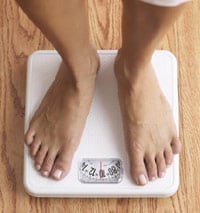
If you ask yourself these questions and find that you've decreased your activity level or made some poor food choices, make a commitment to yourself to get back on track. Set some reasonable goals to help you get more physical activity and make better food choices.


Resource: http://www.cdc.gov/healthyweight/prevention/index.html

Tuesday, 5 March 2013

How to Burn Fat

Turn your body into a fat burning machine

I once had a client who asked, "When I eat too many calories, how do they know to go straight to my thighs? Do they have some kind of homing device or what?" I suppose that's one way to look at it since our genes usually determine where we store excess fat and how and where we burn fat. A more important point is that, if we didn't eat too many calories, we wouldn't have any extra calories to store. We have no problem gaining fat but trying to burn fat is another problem.

We all have areas where fat cells seem to congregate and, sadly, thrive. The real challenge is how to burn fat. We hear a lot about fat burning, from working out in the 'fat burning zone' to eating foods or taking supplements that supposedly burn more fat. But, gimmicks aside, what we all want to know is: What's the best way to burn fat? Knowing a little more about how your body works can help you become a better fat burning machine.

The Basics of Burning Fat
 
If you're trying to lose weight, knowing how your body uses calories for fuel can make a difference in how you approach your weight loss program. We get our energy from fat, carbs and protein. Which one our bodies draw from, however, depends on the kind of activity we're doing. Most people want to use fat for energy, which makes sense. We figure, the more fat we can use as fuel, the less fat we'll have in our bodies. But, using more fat doesn't automatically lead to losing more fat.

Understanding the best way to burn fat starts with some basic facts about how your body gets its energy:
  • The body primarily uses fat and carbs for fuel. A small amount of protein is used during exercise, but it's mainly used to repair the muscles after exercise.
  • The ratio of these fuels will shift depending on the activity you're doing.
  • For higher intensity exercise, such as fast-paced running, the body will rely more on carbs for fuel than fat. That's because the metabolic pathways available to break down carbs for energy are more efficient than the pathways available for fat breakdown.
  • For long, slower exercise, fat is used more for energy than carbs.
  • When it comes to weight loss, it doesn't matter what type of fuel you use. What matters is how many calories you burn as opposed to how many calories you take in.
This is a very simplified look at energy with a solid take-home message. When it comes to weight loss, what matters is burning more calories, not necessarily using more fat for energy. And, the harder you work, the more calories you'll burn overall. Think about it this way: When you sit or sleep, you're in your prime fat-burning mode. But, you've probably never contemplated the idea of sleeping more to lose weight, as lovely as that thought is.

The bottom line? Just because you're using more fat as energy doesn't mean you're burning more calories.

The Myth of the Fat Burning Zone
 
One thing we know is that exercising at lower intensities will use more fat for energy. This basic premise is what started the theory of the 'fat burning zone,' or the idea that working in a certain heart rate zone (around 55 to 65 of your maximum heart rate) will allow your body to burn more fat.
Over the years, this theory has become so ingrained in our exercise experience that we see it touted in books, charts, websites, magazines and even on cardio machines at the gym. The trouble is that it's misleading. Working at lower intensities isn't necessarily a bad thing, but it won't burn more fat off your body unless you're burning more calories than you're eating. One way to increase your calorie burn is to exercise at higher intensities.

Does this mean that, if you want to burn more fat, you should avoid low intensity exercise? Not necessarily. There are some specific things you can do to burn more fat and it all starts with how and how much you exercise.

Go to Fat Burning Tip #1

By , About.com Guide
About.com Health's Disease and Condition content is reviewed by our Medical Review Board